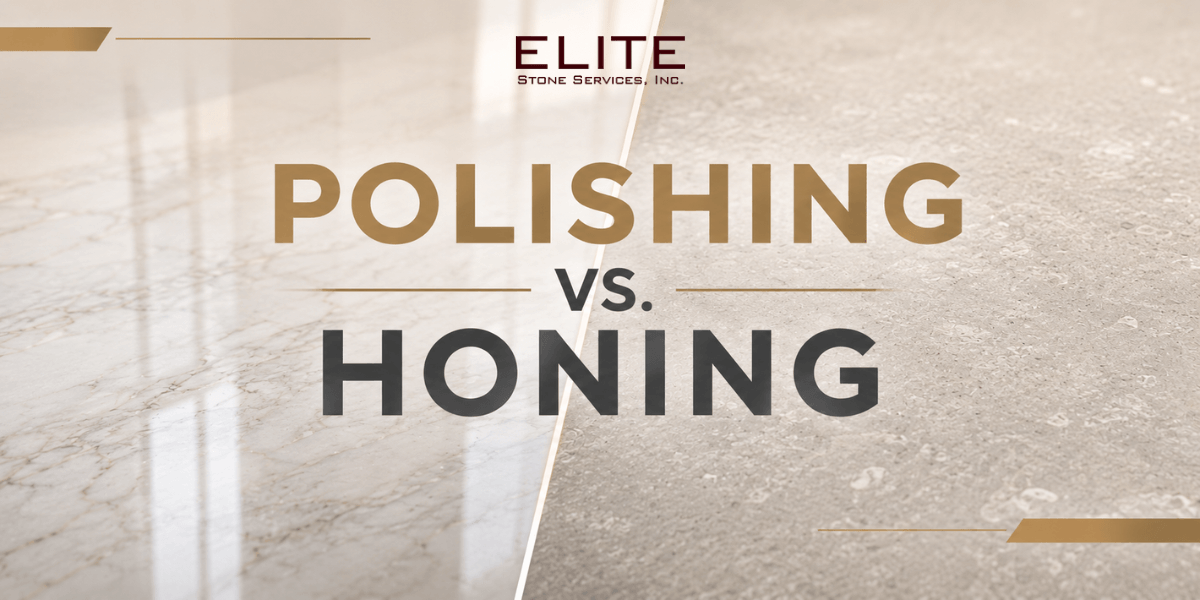
Natural stone floors and countertops can look completely different depending on how the surface gets finished. Two slabs cut from the same block can end up looking nothing alike once one is polished and the other is honed. Homeowners land right in the middle of the stone-polishing vs. honing debate, mostly because both finishes look great in photos but behave very differently once real life kicks in. Shine, texture, grip, and daily upkeep all shift based on which finish you pick.
This guide explains both processes in plain, easy terms, compares them side by side, and helps you choose the right finish for the right room in your home.
What is the Difference Between Polishing and Honing?
Both finishes start with the same grinding process, but where that process stops changes everything.
The Polishing Process Explained
The polishing process continues to grind with progressively finer diamond abrasives until the surface becomes glossy and reflective. Fabricators typically push past 1500 grit to reach that mirror-like shine. The result highlights veining and color with maximum contrast.
The Honing Process Explained
The honing process uses the same grinding steps but stops earlier, usually between 220 and 600 grit. The surface ends up smooth and flat, never developing a shine, and light diffuses evenly across it without any reflective bounce.
Grit Levels and Surface Texture
Grit level is really what separates these two finishes. Lower grit numbers leave a coarser, matte texture, while higher grit numbers produce a glassy surface. The difference between the two lies entirely in how far the grinding process is carried out, not in separate techniques.
Light Reflection and Appearance
Polished surfaces reflect light directly, creating a good, mirror-like effect that deepens color and veining. Honed surfaces diffuse light, producing a softer and more muted look. Neither finish changes the stone itself, only how it interacts with light.
Slip Resistance and Safety
A honed surface carries more texture underfoot, which gives it better grip in wet areas. Polished stone becomes noticeably slippery once water hits the surface. This simple detail usually helps you choose the right finish for a bathroom or entry floor.
Marble Polishing vs Honing: Which Finish Fits Your Space
The right finish depends less on the stone and more on how the room gets used every day.
Kitchens and Countertops
Kitchen counters regularly see acidic spills from citrus, wine, and vinegar, and those spills etch marble regardless of the finish. A honed surface hides those etch marks far better than a polished one. Many homeowners comparing marble polishing and honing for a kitchen end up choosing honed for exactly this reason.
Bathrooms and Wet Areas
Water exposure makes bathroom floors one of the clearest cases for choosing a honed finish. The added grip reduces the risk of slipping, and the matte surface hides water spots and soap residue. Polished marble still works well on a vanity top where foot traffic never touches the stone.
Entryways and Formal Spaces
Foyers, fireplace surrounds, and formal living areas rarely experience heavy wear, making them a strong fit for a polished finish. The reflective shine creates a dramatic first impression as soon as guests walk through the door. Low traffic means the surface stays looking sharp with less upkeep.
The front door is where a home makes its first impression, and a professional polish is what keeps that shine intact. Elite Stone Services, Inc. offers reliable marble polishing services for homeowners ready to put their best foot forward. Contact us today!
Pros and Cons of Honed vs Polished Stone
Honed stone brings a lot to the table for busy households. It hides everyday wear well, feels safer underfoot when wet, and gives a room a soft, natural look that fits almost any design style. The matte surface also does a better job of camouflaging dust, footprints, and light surface scratches between cleanings, which matters most in rooms that see constant use.
That said, honed surfaces are more porous, so they soak up stains a little faster and need sealing every three to six months to stay protected. Even with that extra step, the benefits of honed stone tend to outweigh the upkeep for most households, since minor imperfections don’t stand out as much as they would on a glossy finish. It’s a small price to pay for a low-fuss floor that still looks like real stone.
Polished stone brings the opposite trade-off. The high shine makes color and veining pop, resists stains a bit better once sealed, and instantly upgrades a room’s sense of formality. That reflective surface also makes smaller rooms feel brighter and more open, since light bounces around rather than getting absorbed.
On the flip side, every scratch and etch mark shows up clearly against that glossy surface, so spills need to be wiped up fast before they leave a lasting mark. Regular buffing helps maintain the shine over time, but skipping it can cause the surface to look dull in high-traffic spots. It’s a beautiful option, but it requires more day-to-day attention to keep it looking its best.
Which Is Better, Polished or Honed Marble?
Room by room, the right pick becomes clearer once you consider daily use.
For High-Traffic Homes
Families with kids, pets, or a busy household usually get more mileage out of a honed finish. The matte surface hides daily wear well and rarely shows every mark. That practical edge makes honed the more common pick for floors.
For Formal or Low-Traffic Spaces
A powder room, fireplace surround, or accent wall rarely sees heavy use so that a polished finish can shine without much worry. Deciding the better option really depends on where the stone sits in the home and how much daily wear it receives.
For Homes with Kids or Pets
Spills, muddy paws, and dropped toys are just part of daily life in homes with young kids or pets. A matte stone finish handles this everyday wear well, making it a practical choice for busy households where a glossy surface would quickly show scratches, smudges, and other marks.
For Resale and Long-Term Value
Buyers touring a home notice a polished countertop right away, since the shine reads as upscale at first glance. A well-kept honed floor still holds its own, since buyers care more about overall condition than which finish sits on the stone.
Can Honed Stone Be Polished Later?
Yes, and it’s a common request from homeowners who chose honed at first and later want more shine. A professional grinds and buffs the surface through finer and finer abrasives, the same steps used in a fresh polish job, working the shine back up in stages. It takes real skill and the right equipment, so it’s not a weekend project.
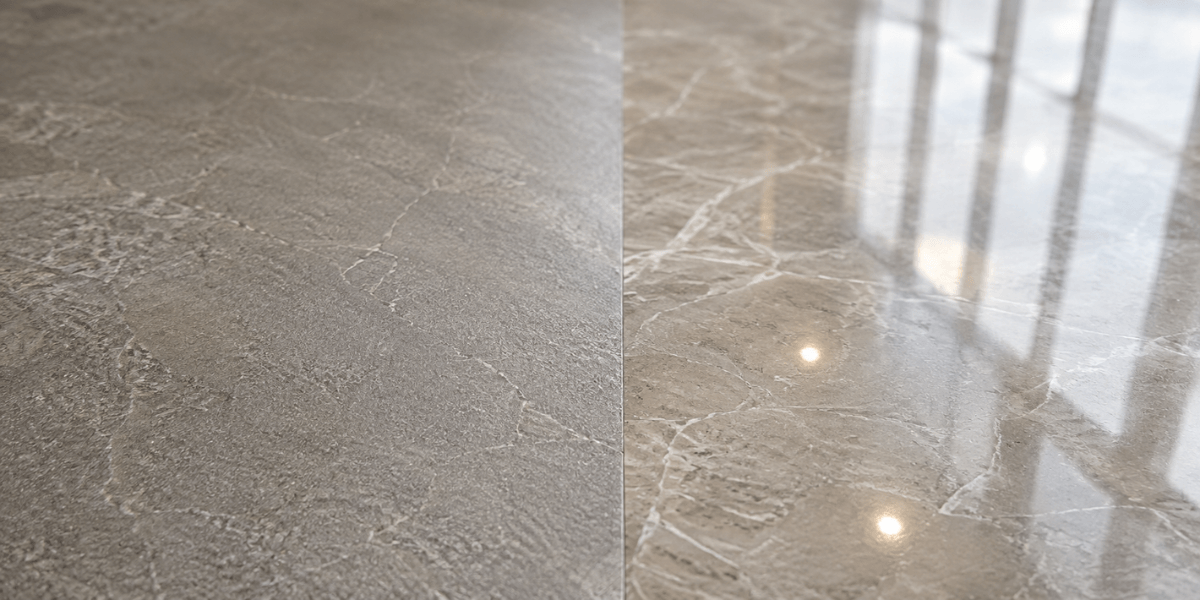
Changing from a polished surface to a matte finish is much simpler, and it lets homeowners enjoy the benefits of honed stone without starting from scratch. It only requires stopping the grinding process earlier, so the work is less extensive. Since both finishes can be achieved later if needed, you’re not locked into your original choice forever.
Frequently Asked Questions
Here are quick answers to the questions homeowners most often ask before choosing a finish.
-
What is the difference between stone polishing and honing?
The polishing process continues until the surface turns glossy and reflective. Honing stops earlier, leaving a smooth, matte surface with no shine.
-
Which is better, polished or honed stone?
Neither finish beats the other outright. The better option depends on the room, the level of traffic, and how much upkeep a homeowner wants to commit to.
-
When should I choose honed stone over polished stone?
Honed stone makes sense for kitchens, bathrooms, and any high-traffic area where slip resistance and hiding wear are most important.
-
Does polished stone require more maintenance?
Polished stone actually needs less frequent sealing, but scratches and etch marks show up more clearly and need quicker attention.
-
Can honed stone be polished later?
Yes, a professional can grind and buff a honed surface up to a full polish, though the process takes additional time and labor.
Wrap Up
The right finish for a home depends on how a room gets used, not which one photographs better. A busy kitchen or a bathroom that sees water every day will hold up better with a matte finish, and the practical upside of that choice becomes obvious within the first few months of daily use. A formal entryway or a fireplace surround can carry a glossy finish without much wear and tear, since foot traffic rarely reaches those surfaces. The stone polishing vs. honing debate ultimately settles once a homeowner considers how each room in their house actually functions day-to-day, and matching the finish to the space matters more than picking a personal favorite.
Elite Stone Services, Inc. has spent more than twenty years handling natural stone installation, restoration, and repair across the Pensacola area. Reach out today for a quote and expert guidance on the right finish for your home.