Summary
Choosing patio stone on the Gulf Coast means weighing humidity, rain, sun, and salt air. Bluestone and dense flagstone resist moisture and heavy use, while sealed travertine stays cooler underfoot. Match the stone’s density, finish, and maintenance needs to your space, and consult professionals for installation. Elite Stone Services, Inc. supports homeowners across the Pensacola area with expert stone care.
Picking stone for your patio sounds simple until you’re standing in a showroom, staring at three very different samples. Each one looks great in the catalog. But will it still look great after a season of Gulf humidity, afternoon downpours, and salty breezes? If you live in Pensacola, Gulf Breeze, Navarre, Destin, Orange Beach, Perdido Key, Mobile, or Panama City, that question matters. Let’s work through it together so you can choose with confidence.
Why Climate Should Drive Your Stone Choice
Before we compare the stones, let’s talk about the weather your patio will face. Stone is tough, but it isn’t indifferent to its surroundings. Climate shapes how it wears, how it feels underfoot, and how much upkeep it asks for.
What Gulf Coast Conditions Do to Outdoor Stone
Coastal patios deal with a specific mix of stressors. Here’s what you’re up against:
- Constant humidity that encourages algae, mildew, and moss on damp surfaces.
- Heavy rain and standing water that test both slip resistance and drainage.
- Strong sun that can heat darker surfaces.
- Salt in the air that may gradually affect unsealed, porous stone.
- Storm debris and the occasional cold snap.
Why a Stone Patio Material Comparison Helps
A side-by-side stone patio material comparison helps you avoid choosing based on looks alone. Color and texture matter, of course. But porosity, density, and surface finish matter even more once the first rainy season arrives.
Flagstone vs Bluestone vs Travertine: Meet the Contenders
So, how do these three really differ? Let’s look at each one individually.
Flagstone
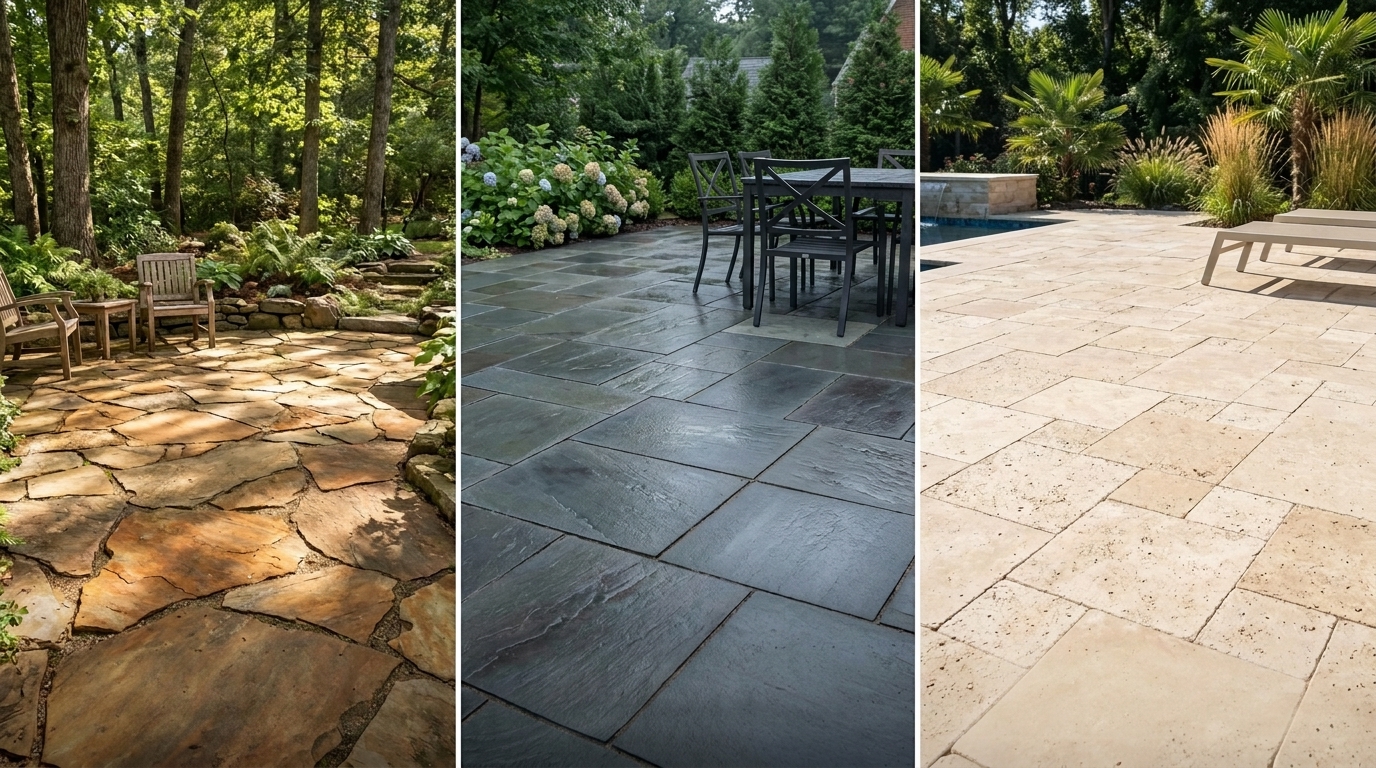
Flagstone isn’t a single stone. The term covers flat slabs of layered rock such as sandstone, limestone, slate, or quartzite, so color and density vary widely between types. Irregular shapes give a natural, rustic look, while a textured or natural-cleft finish can provide good outdoor traction. Because quality varies, the specific rock type matters more than the label.
Bluestone
Bluestone usually refers to a dense sandstone used for paving. Most people recognize it by its blue-gray tones, although color and composition vary by source. It handles heavy foot traffic well, and as cut pavers, it delivers a clean, formal look. A textured finish can improve traction in wet areas, so match the finish to how you plan to use the space. The trade-off? Darker shades can get hot in direct sun.
Travertine
Travertine is a type of limestone that forms near mineral springs. You’ll recognize it by its soft, earthy tones and natural pitting. It stays comparatively cool underfoot, which is why so many homeowners choose it around pools. Some travertine varieties are relatively porous, so check the absorption rate and sealing requirements for the specific product.
Stone Patio Material Comparison at a Glance
Sometimes a table says it faster than a paragraph. Keep in mind that results vary by quarry and finish.
| Feature | Flagstone | Bluestone | Travertine |
| Look | Rustic, irregular | Clean, formal | Soft, earthy |
| Density | Varies by rock type | Dense | Moderate and porous |
| Heat underfoot | Depends on color | Can run warm in darker shades | Generally cooler |
| Wet traction | Good with textured surface | Good with thermal finish | Good with tumbled or honed finish |
| Sealing needs | Depends on stone and use | Depends on stone and finish | Often benefits from sealing |
| Moisture performance | Varies considerably | Generally good with appropriate selection | Varies by variety and installation |
Which Natural Stone Is Most Durable Outdoors?
If you’ve been asking which natural stone is most durable outdoors, the honest answer is that it depends on the rock and the installation. Many bluestone products offer good durability and relatively low absorption, but real-world performance depends on the stone’s tested properties. Dense flagstone varieties, such as quartzite or slate, can perform just as well. Travertine holds up too, but its porous structure makes sealing and drainage essential.
What Actually Determines Longevity
Durability isn’t just about the stone you pick. These factors carry real weight:
- Density and porosity of the specific stone.
- A properly prepared base with good drainage.
- Surface finish and slip resistance.
- Consistent sealing and cleaning.
Best Stone for Patio in Humid Climate
Humidity changes the conversation. Moisture lingers, and lingering moisture invites growth. Here’s how each option responds.
Bluestone and Flagstone in Damp Conditions
Dense, low-absorption stones take in less water, which makes them less prone to moisture-related staining with proper installation and maintenance. If you’re looking for the best stone for a patio in a humid climate, a dense flagstone or bluestone can be a strong option, as long as the specific stone and finish suit outdoor use.
Choosing a Finish for Wet Areas
Whichever you pick, favor textured, flamed, or natural-cleft surfaces over polished ones. Traction matters most when rain rolls in.
Travertine in Humid Areas
Travertine can work well here too, as long as you seal it and install it with proper drainage. Skip those steps, and you may notice staining or biological growth over time.
Keeping Your Stone Looking Its Best
Whatever you select, stone benefits from some attention. So, what does good care look like?
- Sweep regularly to keep grit and debris from building up.
- Rinse spills promptly.
- Use pH-neutral cleaners rather than harsh acids.
- Reseal once water no longer beads on the surface.
Stone care doesn’t stop at the patio, either. If your indoor marble floors have lost their luster, Elite Stone Services, Inc. offers marble polishing services for homeowners across the Pensacola area. Reach out to bring back that shine.
Travertine Pros and Cons for Patios
Since travertine raises so many questions, it deserves its own look. Let’s weigh it fairly.
The Advantages
- Stays comparatively cool underfoot.
- Offers a warm, natural appearance that suits many home styles.
- Available in finishes that improve traction.
The Drawbacks
Here’s where travertine pros and cons for patios get real. Its porosity means it needs regular sealing. It can also etch on contact with acidic substances, and it may show wear faster in high-traffic areas.
How to Choose With Confidence
Ready to narrow it down? Start with a few honest questions about your space.
- How much direct sun does the patio get?
- Will it surround a pool or stay mostly dry?
- What look are you after: rustic, formal, or soft and natural?
- How much upkeep are you comfortable with?
Once you have your answers, this quick guide can point you toward a good starting place.
| Your Situation | Stone to Consider | Why It Fits |
| Pool surround with strong sun | Travertine | Stays comparatively cool underfoot |
| Formal, uniform look | Bluestone | Cut pavers create clean lines |
| Rustic, natural look | Flagstone | Irregular shapes and textured surface |
| Heavy foot traffic | Bluestone or dense flagstone | Dense structure resists wear |
| Shaded, frequently damp areas | Dense flagstone or bluestone with a textured finish | Absorbs less moisture and offers traction |
Request samples and view them outdoors, in your own light. A professional can also help you match the stone to your site conditions.
FAQs
1. Which stone handles Gulf Coast humidity best?
Dense options like bluestone and quality flagstone absorb less moisture and dry faster. Sealed travertine also performs well with properly planned drainage.
2. Do you need to seal travertine for outdoor use?
Yes, we strongly recommend it. Because travertine is porous, a quality sealer helps it resist stains, moisture, and surface growth.
3. Is bluestone too hot for bare feet?
Darker bluestone can warm up in direct sun. Lighter shades and shaded areas are more comfortable, and travertine tends to stay cooler.
4. Can flagstone patios become slippery when wet?
Textured, natural-cleft flagstone typically offers good traction. Smooth or polished surfaces are more likely to be slippery, so choose your finish carefully.
5. How do I keep a stone patio looking good in a humid climate?
Sweep often, clean with pH-neutral products, keep drainage clear, and reseal when water no longer beads on the surface.
Final Thoughts
There’s no single winner in the flagstone vs bluestone vs travertine debate. Each stone earns its place under the right conditions. Dense options handle humidity and heavy use with less fuss, while travertine offers comfort and warmth when you seal it and care for it properly. Choose the stone that fits your climate, your style, and your maintenance habits, and your patio will serve you well.
When you’re ready to move forward, Elite Stone Services, Inc. can guide you through natural stone installation for your Gulf Coast home. Contact the team today to get started.